


Turning health documents into insights
Turning health documents into insights
Diagnostics • consumer app
Diagnostics • consumer app
00
00
Context
Context
00
Users carry their health history across a stack of disconnected documents — lab reports, prescriptions, and radiology scans, each in a different format and a different app or folder. Our product lets people upload any of these and get back plain-language, AI-generated insights: what the results mean, what to track, and what to do next.
I designed the end-to-end upload experience across all three document types, as a single coherent system rather than three separate features.
Users carry their health history across a stack of disconnected documents — lab reports, prescriptions, and radiology scans, each in a different format and a different app or folder. Our product lets people upload any of these and get back plain-language, AI-generated insights: what the results mean, what to track, and what to do next.
I designed the end-to-end upload experience across all three document types, as a single coherent system rather than three separate features.
01
01
The Problem
The Problem
01
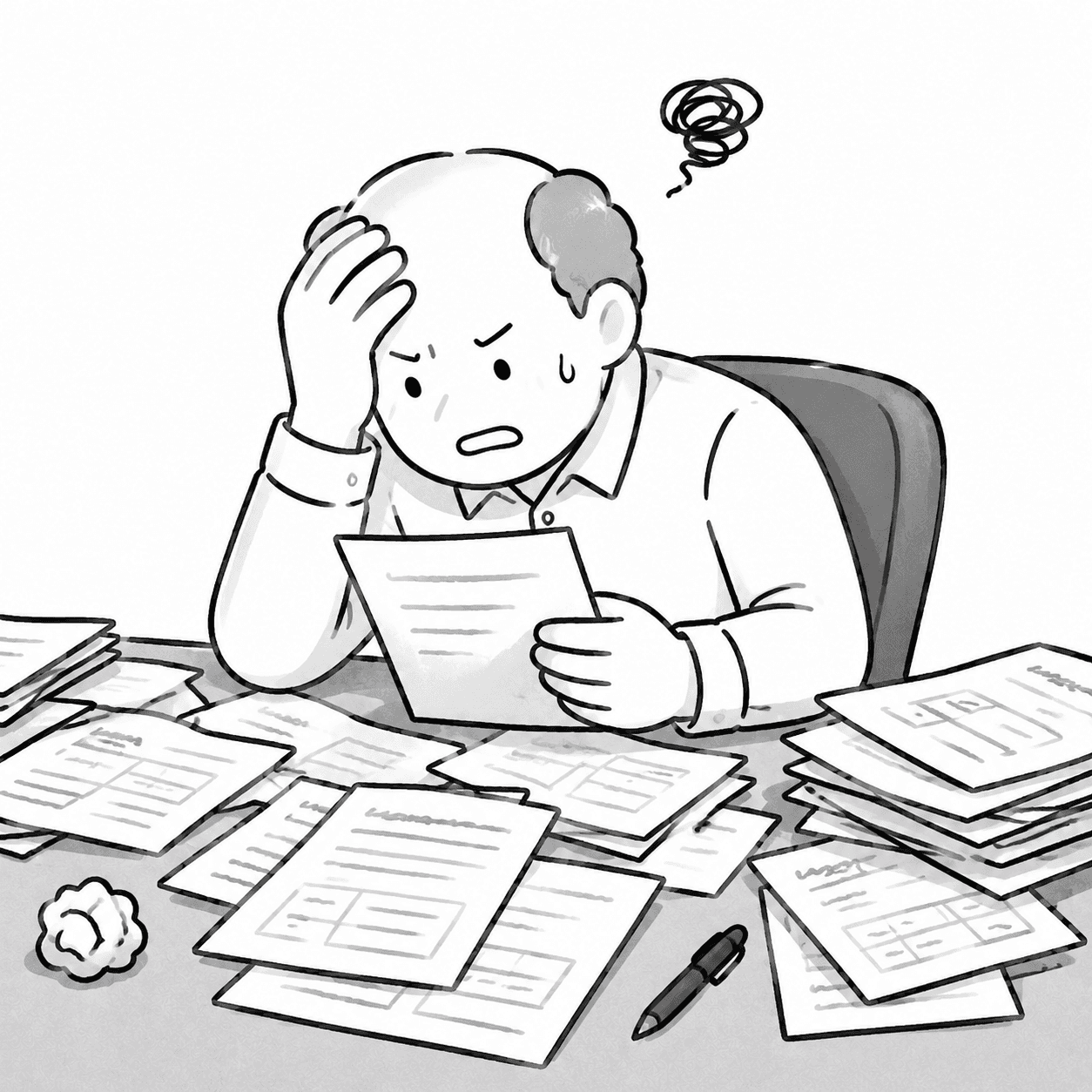
A health record is only useful if it's understood. Most people receive a PDF or a photo of a report and have no way to interpret it. The core challenge wasn't the upload itself — it was designing a flow that could:
A health record is only useful if it's understood. Most people receive a PDF or a photo of a report and have no way to interpret it. The core challenge wasn't the upload itself — it was designing a flow that could:
handle three distinct document types (Rx, lab report, scan) that have different rules and outputs,
work for a family, not just one person. Users upload on behalf of parents, partners, and children,
and stay trustworthy while an AI processes sensitive medical data behind the scenes.
handle three distinct document types (Rx, lab report, scan) that have different rules and outputs,
work for a family, not just one person. Users upload on behalf of parents, partners, and children,
and stay trustworthy while an AI processes sensitive medical data behind the scenes.
02
02
Approach
Approach
02
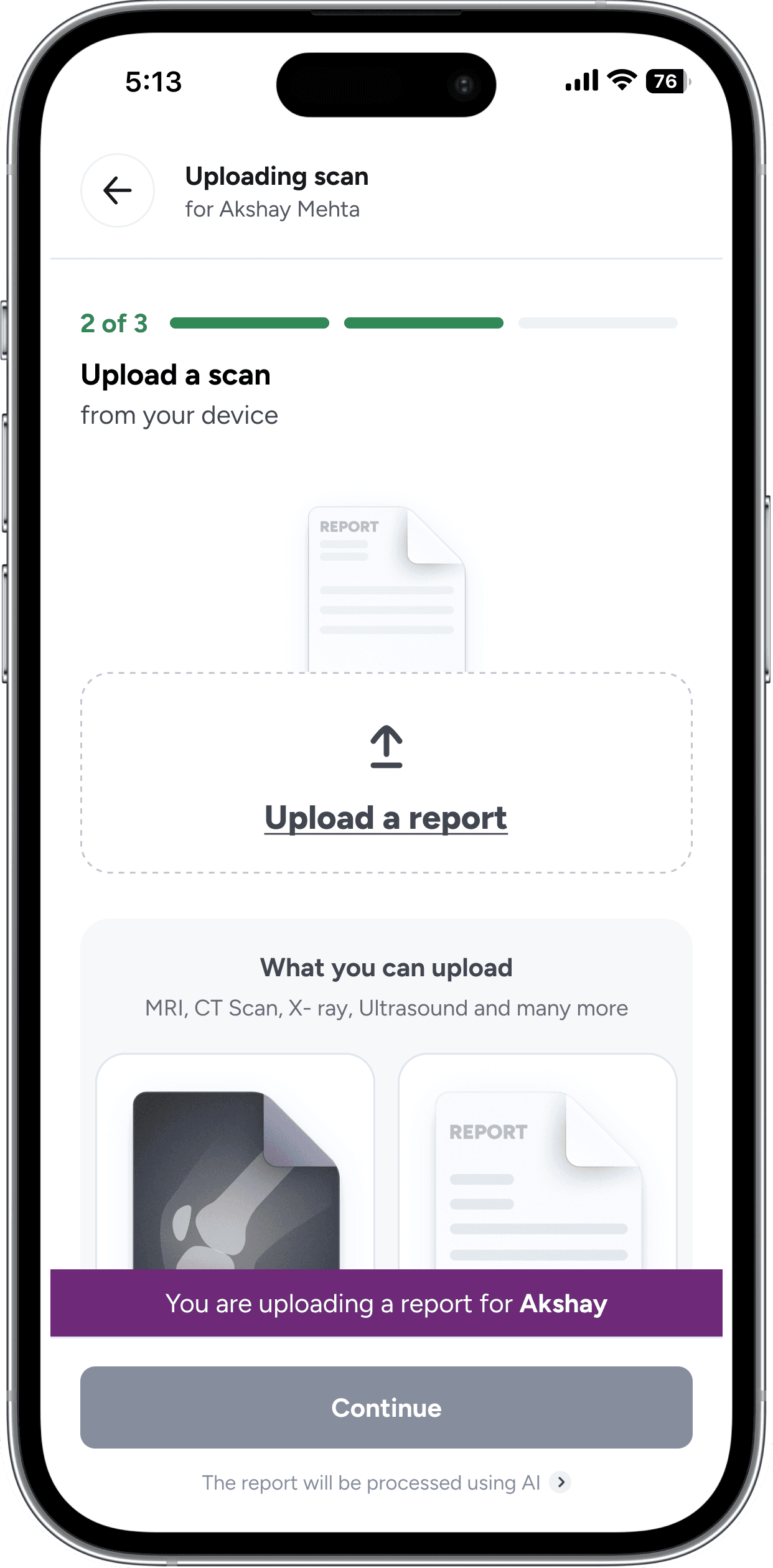
Rather than building a bespoke flow per document type, I designed one shared journey and varied only what each document required:
Rather than building a bespoke flow per document type, I designed one shared journey and varied only what each document required:
Select member → Choose/confirm type → Upload from device → AI processing → Insight
Select member → Choose/confirm type → Upload from device → AI processing → Insight
This kept the mental model identical no matter what someone uploaded, while still respecting the differences — for example, lab reports capture extra metadata (report name, date, lab), prescriptions distinguish typed vs. handwritten, and scans surface organ-level inferences.
This kept the mental model identical no matter what someone uploaded, while still respecting the differences — for example, lab reports capture extra metadata (report name, date, lab), prescriptions distinguish typed vs. handwritten, and scans surface organ-level inferences.
03
03
Key design decisions
Key design decisions
03
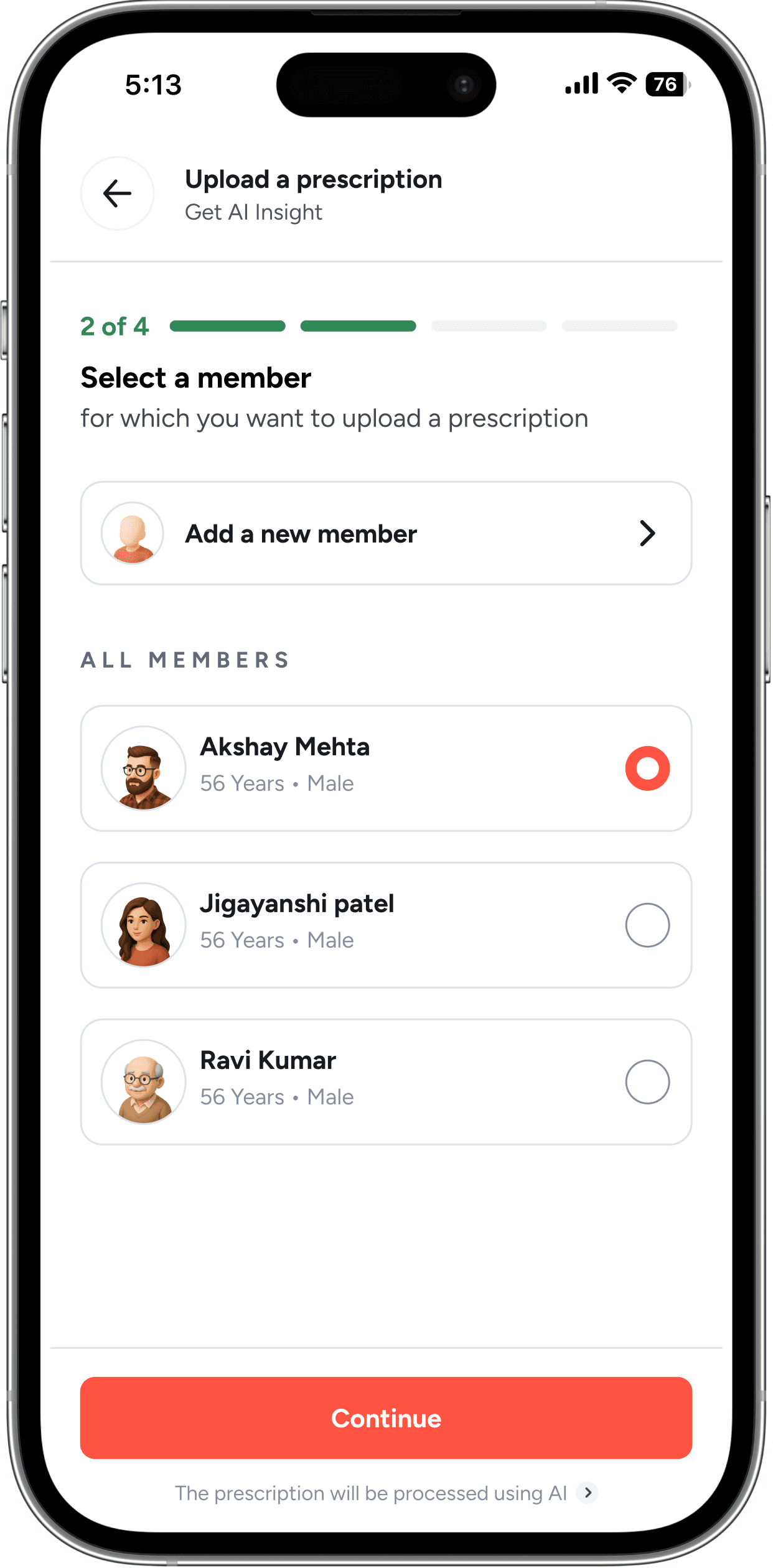
A household-first model. Every upload begins by choosing who the document is for, with a first-class "Add a new member" path and a guided empty state for users who haven't added anyone yet ("You need to add a member in order to upload a report for them"). This made the product feel like a family health vault rather than a single-user utility
A household-first model. Every upload begins by choosing who the document is for, with a first-class "Add a new member" path and a guided empty state for users who haven't added anyone yet ("You need to add a member in order to upload a report for them"). This made the product feel like a family health vault rather than a single-user utility
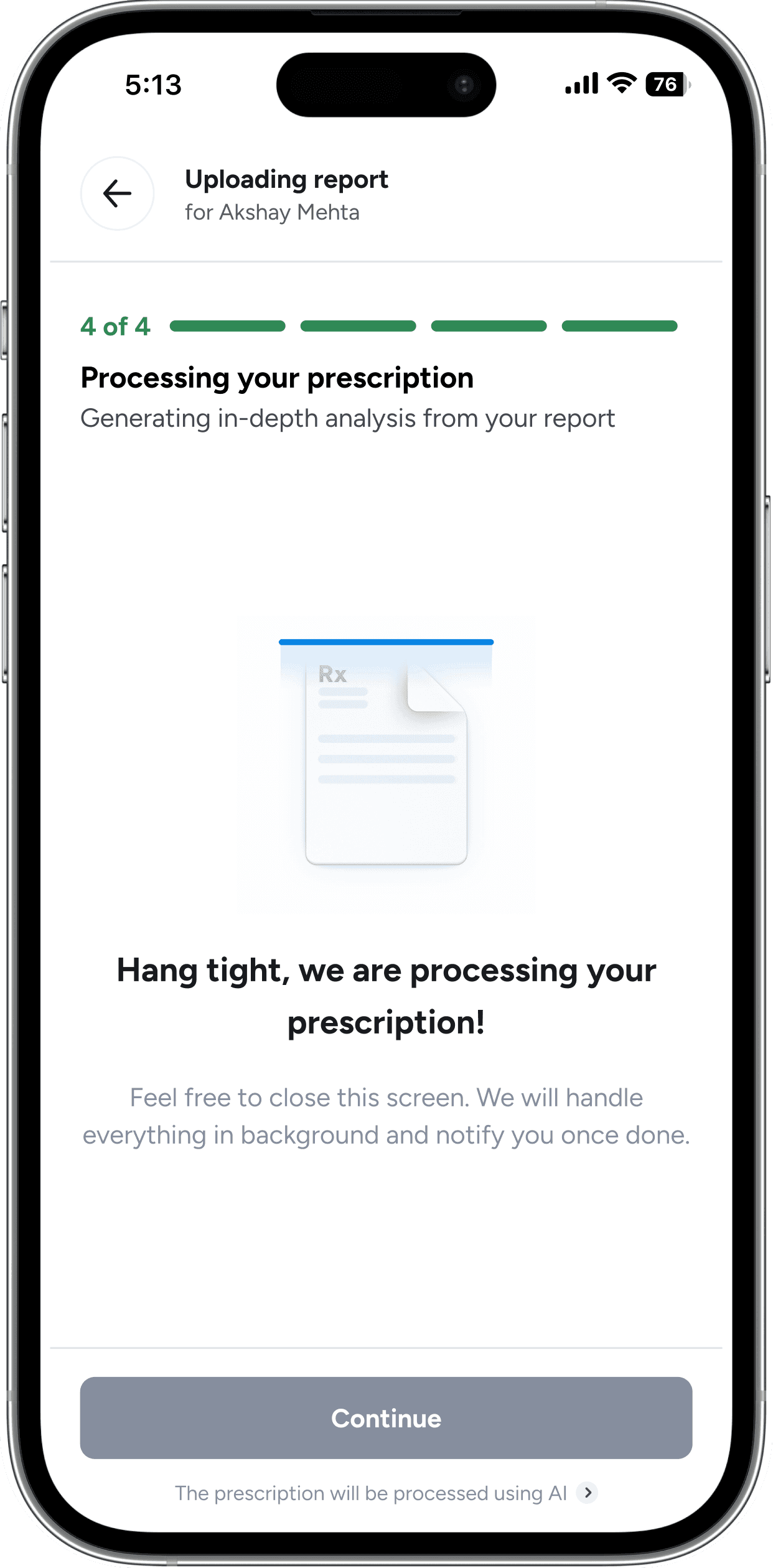
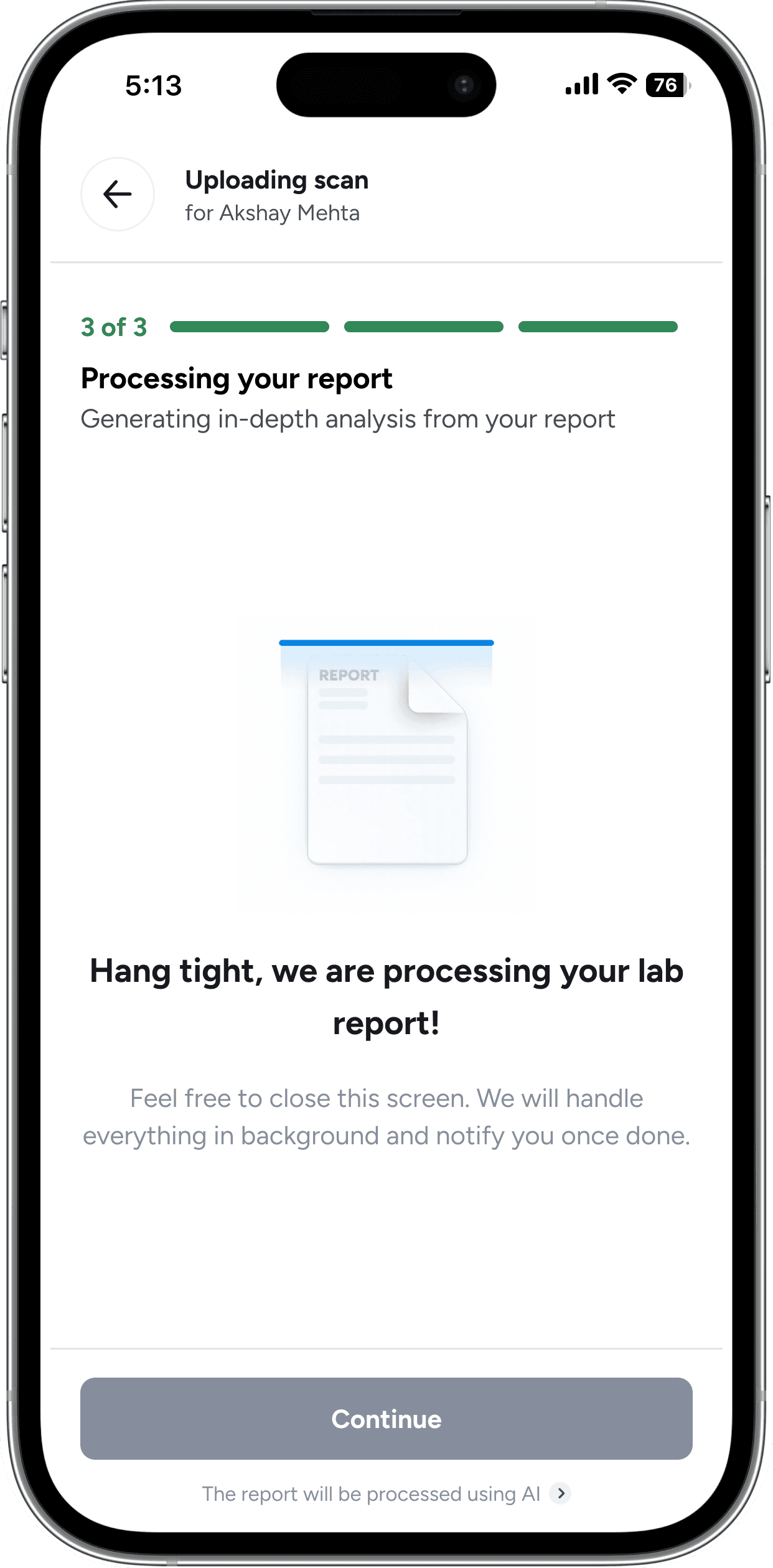
Designing the wait, not hiding it. AI digitization takes time, so the processing screen reassures rather than blocks: "Feel free to close this screen — we'll handle everything in the background and notify you once done." Progress is shown both full-screen and as a compact mini-bar, so users can leave and the work continues.
Designing the wait, not hiding it. AI digitization takes time, so the processing screen reassures rather than blocks: "Feel free to close this screen — we'll handle everything in the background and notify you once done." Progress is shown both full-screen and as a compact mini-bar, so users can leave and the work continues.
04
04
The three flows
The three flows
04
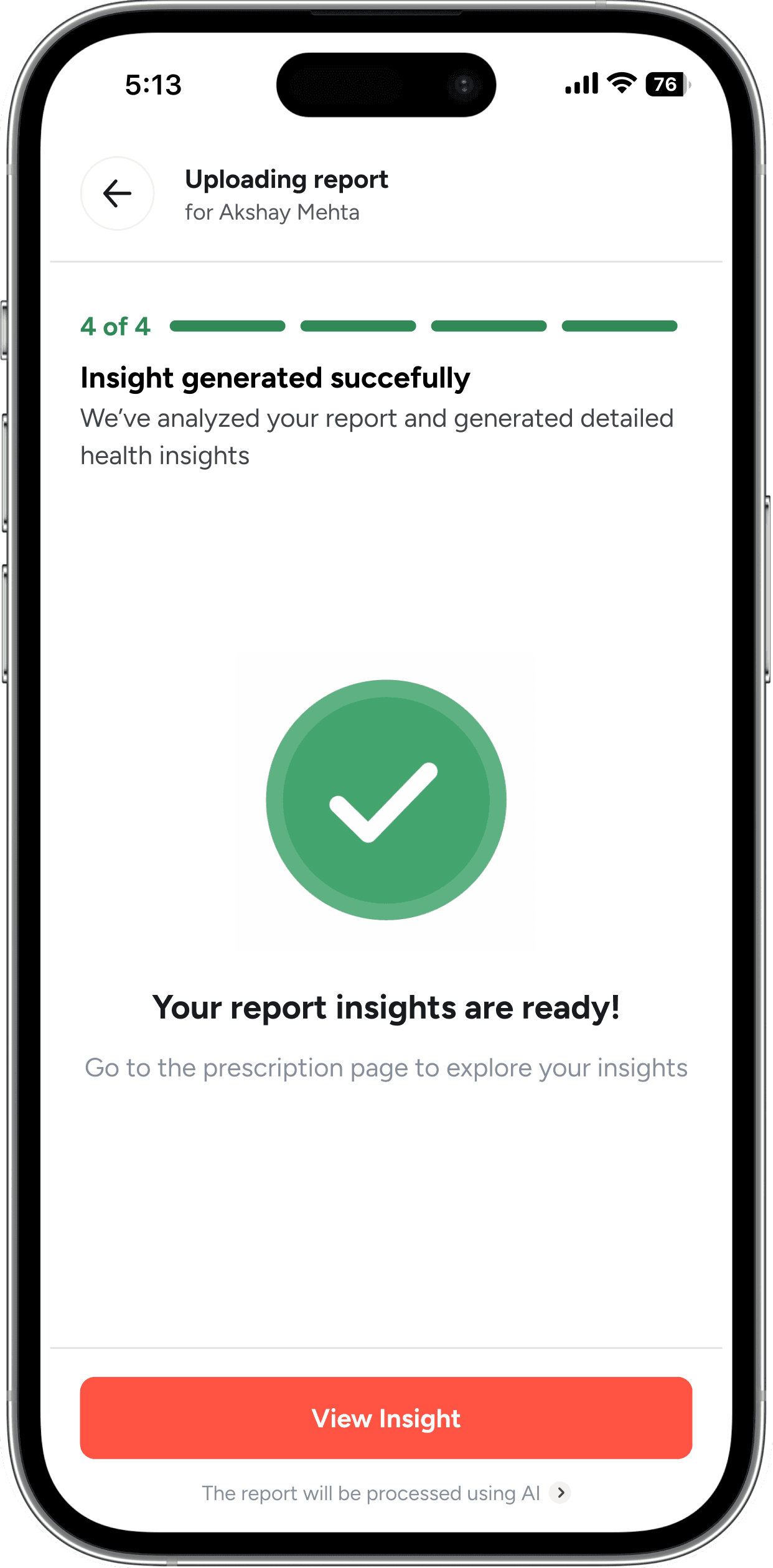
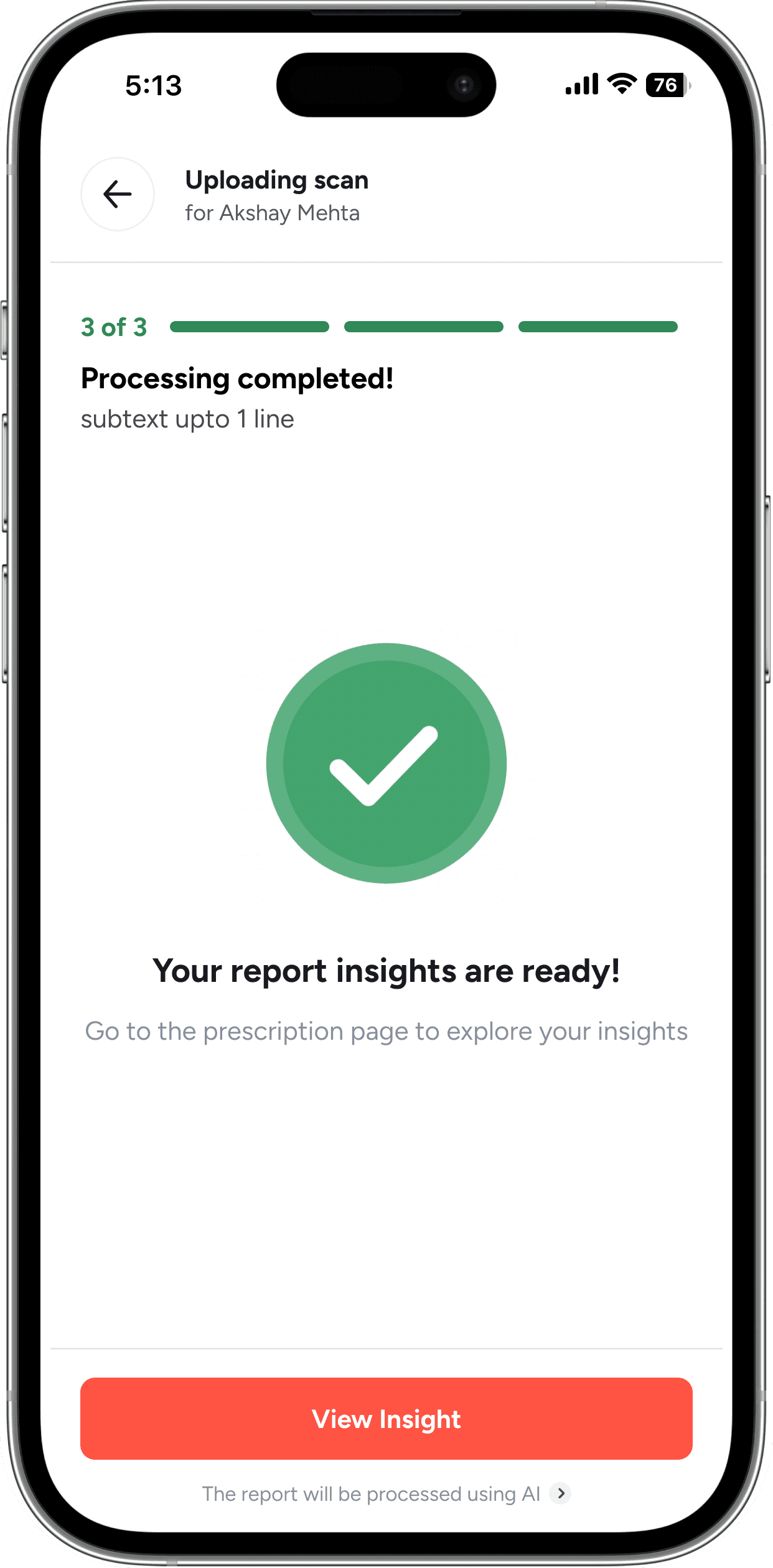
All three share the same spine — select member → upload → process → insight — and diverge only where the document demands it.
All three share the same spine — select member → upload → process → insight — and diverge only where the document demands it.
Lab report
Lab report



Prescription
Prescription


Radiology scan
Radiology scan



06
06
Closing the loop
Closing the loop
05
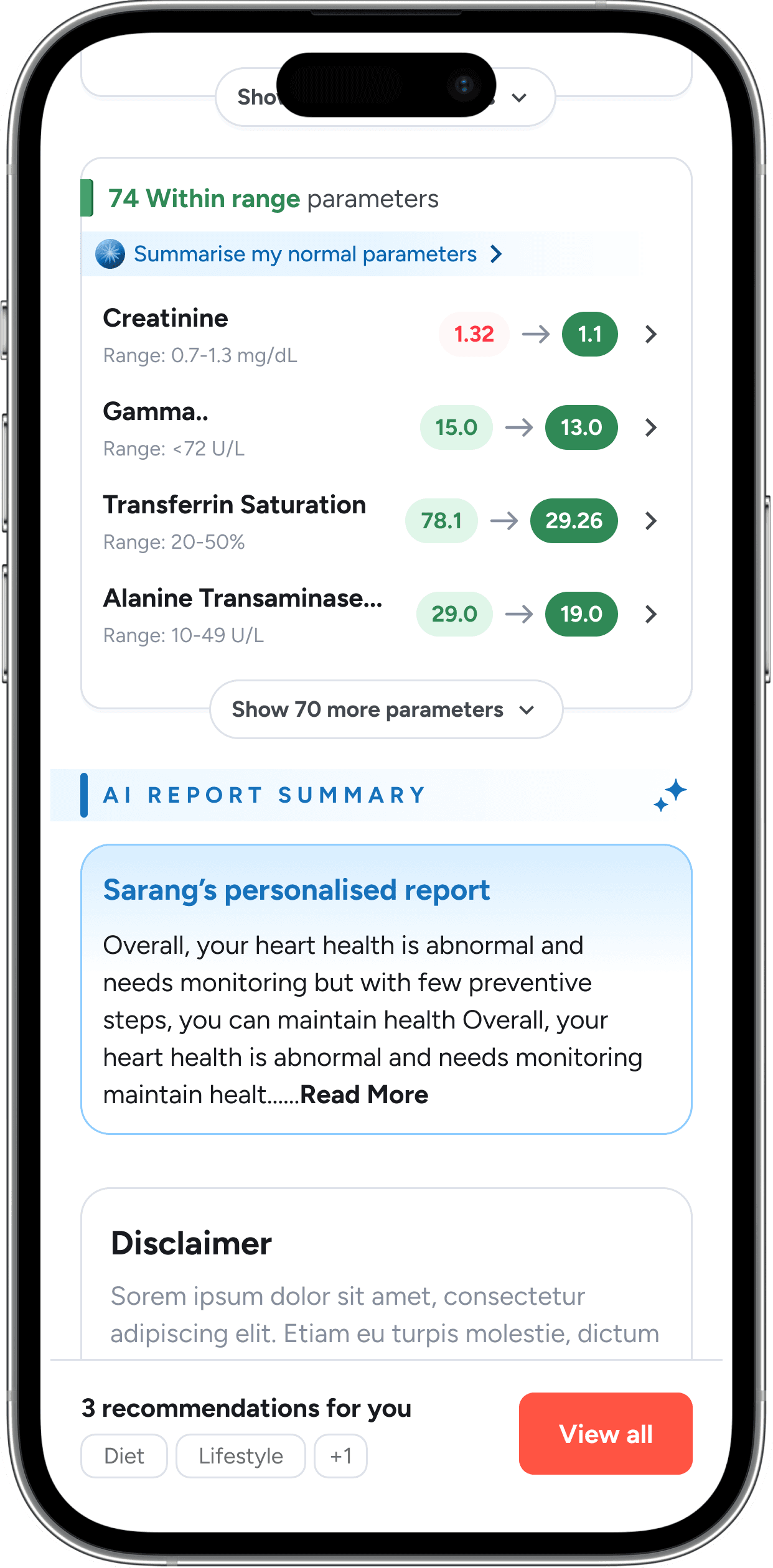
Uploading and understanding a document is only half the journey. Once a user brings in their latest lab report or prescription, we leverages that data to power the next step — turning a passive record into personalised, actionable care:
Uploading and understanding a document is only half the journey. Once a user brings in their latest lab report or prescription, we leverages that data to power the next step — turning a passive record into personalised, actionable care:
Test recommendation engine
Test recommendation engine
How do we ensure users come back and continue improving their health instead of treating lab tests as a one time activity?
How do we ensure users come back and continue improving their health instead of treating lab tests as a one time activity?
Transform a one time report viewer into a longitudinal health companion.
Instead of waiting for users to remember, proactively guide them back at the right time.
Transform a one time report viewer into a longitudinal health companion.
Instead of waiting for users to remember, proactively guide them back at the right time.


Test due
Test due
A test that is recommended because the user has previously taken it and had abnormal values, and it's now time to retest based on a defined time interval. These are tests that are either pending or upcoming within the next X days (default: 15 days)
A test that is recommended because the user has previously taken it and had abnormal values, and it's now time to retest based on a defined time interval. These are tests that are either pending or upcoming within the next X days (default: 15 days)
Advanced Test
Advanced Test
A deeper diagnostic test recommended when a parameter value is abnormal and a root cause needs to be identified. The recommendation engine evaluates trigger parameters from the user's report, checks conditions, and suggests follow-up tests the user hasn't already taken. For example, if LDL is abnormal, an advanced test might be recommended to investigate further.
A deeper diagnostic test recommended when a parameter value is abnormal and a root cause needs to be identified. The recommendation engine evaluates trigger parameters from the user's report, checks conditions, and suggests follow-up tests the user hasn't already taken. For example, if LDL is abnormal, an advanced test might be recommended to investigate further.


Untested Test (Preventive Test)
Untested Test (Preventive Test)
A must-do test based on the user's age/gender cohort that they haven't taken within the defined validity period. These are preventive in nature — not triggered by an abnormal result, but by the fact that the user simply hasn't done them yet
A must-do test based on the user's age/gender cohort that they haven't taken within the defined validity period. These are preventive in nature — not triggered by an abnormal result, but by the fact that the user simply hasn't done them yet
Medicine ↔ Parameter interaction engine
Medicine ↔ Parameter interaction engine
What health parameters does your medicine impact and what should you monitor?
What health parameters does your medicine impact and what should you monitor?
Medicine × Parameter Interaction is mapping between a prescribed/purchased medicine (SKU) and the blood/health parameters it affects — either by:
Improving a parameter (e.g., a diabetes medicine improving HbA1c)
Causing a side effect on a parameter (e.g., a medicine worsening kidney markers)
Medicine × Parameter Interaction is mapping between a prescribed/purchased medicine (SKU) and the blood/health parameters it affects — either by:
Improving a parameter (e.g., a diabetes medicine improving HbA1c)
Causing a side effect on a parameter (e.g., a medicine worsening kidney markers)
